Part 3
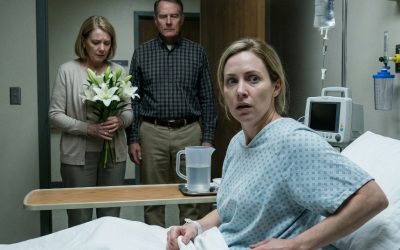
Dad’s illness rewired the way I saw him. Growing up, he’d been the powerful figure who could fix things with money, charm, and connections. Now he was fragile, tethered to machines and schedules, the kind of man who flinched when nurses adjusted his IV.
He tried to make jokes anyway. “Guess I’m not producing my way out of this,” he said once, voice rough.
I laughed because he wanted me to, but it came out thin.
I started visiting every week, then every few days. Sometimes I brought equipment catalogs to show him what I was learning, because his eyes lit up when we talked about cameras and lenses, like it gave him a reason to feel useful again.
Lisa showed up less and less. When she did come, she acted like she was doing him a favor. She’d stand at the end of the bed, check her phone, and say things like, “You need to stay positive,” as if positivity could erase tumors.
Jake and James rarely appeared. If they did, it was usually because Dad had promised to call in a favor for an audition or a role.
One afternoon I arrived to find Dad crying quietly, his face turned toward the window.
“Hey,” I said, sliding into the chair beside him. “What happened?”
He wiped his eyes fast, embarrassed. “Nothing,” he lied.
I didn’t let it go. “Dad.”
His shoulders sagged. “Lisa said she can’t keep doing this,” he admitted, voice cracking. “She said she has to focus on the future. That she can’t… wait around for me to become past.”
The words hit me like a slap because they were so cold, so final.
“She said that to your face?” I asked, anger rising.
He nodded, ashamed, like it was his fault for needing care.
I gripped the armrest until my knuckles whitened. “Where is she now?” I demanded.
Dad hesitated. “Shopping,” he whispered.
Shopping. While he sat in a hospital bed, shrinking.
I wanted to storm out and find her and scream. But Dad looked so small, so defeated, that I swallowed the anger for him.
“Dad,” I said carefully, “you don’t deserve this.”
He let out a sound halfway between a laugh and a sob. “I know,” he whispered. “But I made choices.”
I thought of twelve-year-old me on a staircase. Fifteen-year-old me watching him drive away. The years I’d been distant out of hurt. The years he’d been absent out of work and fear and whatever else lived inside him.
“You tried,” I said, and surprised myself by meaning it. “You tried in the ways you knew.”
He closed his eyes, tears slipping out anyway.
In his final months, Dad got quieter. Less joking. More staring at nothing. Sometimes he’d talk about Mom, about how he missed her, how he’d been terrified of raising me alone.
“I thought if I worked hard enough, I could make you safe,” he told me once. “And then I sent you away and… I made you feel unsafe anyway.”
I didn’t know what forgiveness looked like in real time. So I just held his hand.
When he died, it didn’t feel dramatic. It felt like the air left a room and never came back.
The wake was packed with film industry people. Big names from our country, directors and actors and investors who spoke about Dad’s kindness and talent. Lisa arrived for maybe fifteen minutes, long enough to be seen in black, long enough to accept condolences in front of important faces. She cried perfectly when cameras were near.
Jake and James didn’t show up at all.
After the wake, I made a decision: these people were not my family. Not in any way that mattered.
I planned to leave the city. I had an opportunity in another state, a technical trainee position on a small production. It wasn’t glamorous, but it was honest work, and I wanted distance. I wanted air.
A week later, Dad’s lawyer called me. “You need to come to the house,” he said. “As soon as possible.”
The house. The mansion I’d never really lived in.
When I arrived, Lisa was already there, sitting on the couch like she owned it. Jake and James lounged nearby, faces tight with impatience, like they were waiting for their prize.
Dad’s lawyer, Mr. Hargrove, was a lean man with kind eyes and a voice that carried authority without raising volume. He greeted me with a nod and guided us all into Dad’s office.
He opened a folder. “Theo Marlowe’s will is clear,” he said.
Lisa’s smile was sharp. “Let’s get on with it,” she said.
Hargrove read the terms slowly, legally precise. Dad had left seventy percent of his assets to me. The mansion included. His production shares. Investment accounts. Personal property. A large part of the estate.
He left twenty percent to his parents—my grandparents. They didn’t need it, but I understood why he did: it was his version of gratitude, and maybe apology.
Lisa and her sons received ten percent and a condo in the city. Enough to live comfortably, especially considering she had her own career.
Lisa’s face tightened as the numbers landed.
Jake sat up straighter. “That’s it?” he demanded.
James let out a harsh laugh. “No way,” he snapped. “No way Theo would do that.”
Hargrove remained calm. “Theo signed this in the presence of witnesses,” he said. “It is legitimate.”
Lisa turned toward me, her eyes hard. “You manipulated him,” she accused. “You barely even lived here.”
I swallowed the grief and met her stare. “I lived wherever he sent me,” I said quietly.
Hargrove cleared his throat. “Theo also left a message,” he said, and he handed me an envelope.
My fingers shook as I opened it. Inside was a letter in Dad’s handwriting, slanted and familiar.
He apologized for not being the father he wanted to be. He apologized for the years I felt abandoned. He told me he loved me. He told me he was proud of the woman I’d become without him.
My vision blurred. I pressed the letter to my chest, trying not to break in front of Lisa.
Lisa stood abruptly. “This is absurd,” she snapped. “We’re his family.”
Hargrove’s voice stayed neutral. “Legally, you have your share,” he said. “That is what Theo chose.”
Lisa stormed out, her heels sharp on the floor like gunshots. Jake and James followed, muttering threats under their breath.
When they were gone, I turned to Hargrove. “What happens now?” I asked.
He adjusted his glasses. “Now you secure the property,” he said. “And you prepare, because Lisa won’t accept this quietly.”
That night I called Lisa and told her to remove her belongings from the mansion. “It’s not your home anymore,” I said.
She scoffed. “How can you be so cruel?” she asked. “After everything we’re going through?”
I heard her words from the hospital, echoing. Future. Past.
“I’d rather look at the future than my past,” I replied.
She hung up.
For the first time since Dad died, I felt a spark of something like justice.
Then I left for the weekend to visit my grandparents and tell them everything. They weren’t surprised. Grandpa Callum’s jaw tightened like he’d been waiting for this battle for years.
“Come back careful,” he warned me. “People like Lisa don’t lose gracefully.”
I thought I understood what he meant.
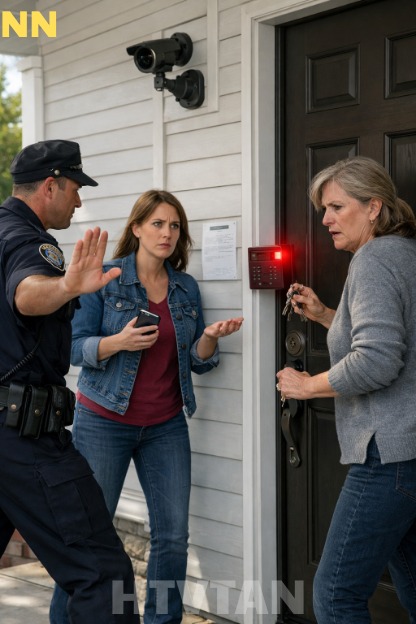
I didn’t realize I was about to come home to an open door and a lesson my father had planned long before his last breath.