Part 1
If you’d met my father at a party, you would’ve assumed he was the kind of man who never lost. Theo Marlowe had that effortless confidence you see in people who work around cameras for a living. He was a producer, not the international kind with billboards in Times Square, but famous enough in our little ocean country that strangers sometimes paused on sidewalks and stared like they were trying to place him. He had the smile, the tailored jackets, the phone that never stopped buzzing.
At home, though, he was just my dad. The man who made grilled cheese at midnight because I couldn’t sleep. The man who sat on the floor beside my bed and read the same story three times because I kept asking for “one more.” The man who kept my mother’s photo on the hallway shelf and touched the frame like he was checking she was still there.
My mom died right after giving birth to me. Pregnancy complications, the kind of tragedy people say with softened voices and sympathetic eyes. I grew up with that story as a shadow in every room. I was told she loved me. I was told she would’ve been proud. I was told my dad was a hero for raising me alone.
I believed all of it, but I also learned early that praise can be a burden. Because if you’re the reason someone became a hero, you start to feel like you owe them for it.
For the first ten years of my life, Dad made me his whole world. We lived in a coastal town where everyone knew everyone, and where wealth didn’t look like skyscrapers so much as gated driveways and quiet power. Dad’s office was half home studio, half war room: scripts stacked like towers, storyboards taped to walls, mugs of cold coffee left everywhere like evidence of a life lived at full speed.
He tried to be present. He really did. But the bigger his career got, the more the world pulled at him. When I turned twelve, he moved us to the film-centered city where the studios and money lived. He told me it would be an adventure. A fresh start. Better schools. More opportunities.
The city felt like it swallowed sound. The school felt like a stage I hadn’t auditioned for.
I didn’t dress like the other kids. I was still wearing what Dad picked: neat clothes, modest, expensive in that way that doesn’t scream designer but still makes people notice. Two boys in my grade decided that made me a target. James and Jake. Same haircut, same cruel smile, like they shared a brain and used it only for bullying.
Every day they found something new. My shoes were “grandma shoes.” My hair was “weird.” The way I pronounced certain words was “stuck-up.” They said I thought I was better than everyone, even though the truth was I was terrified and lonely and trying not to cry in public.
One afternoon they shoved me near the stairs. Not hard enough to be called an assault, not obvious enough for teachers to see until it was too late. My foot caught wrong, and I fell down two steps, my palms scraping against concrete. The sting in my skin was nothing compared to the humiliation of hearing them laugh.
The school called my father. He showed up late, still in production clothes, his face tight with stress. I wanted him to rage. I wanted him to demand accountability. I wanted him to look James and Jake in the eye and make them regret ever touching me.
He didn’t meet them. He didn’t meet their parents. He talked to the principal in a closed office and then drove me home in silence, knuckles white around the steering wheel.
That night, he sat at our kitchen table, staring at a mug of coffee he wasn’t drinking. “I’m sorry,” he said, voice low.
“For what?” I asked, even though I knew.
“For not being there enough,” he said. “For thinking I could juggle everything and you wouldn’t feel it.”
The next week he made a decision that changed my life in ways I didn’t understand until much later. He sent me back to my grandparents.
It was framed as temporary. “Just until you adjust,” he said. “Just until things settle down.” He promised he’d visit. He promised he’d call every day. He promised it wasn’t abandonment.
But when you’re twelve, being sent away feels like a verdict.
My grandparents were angels in human form. Grandpa Callum had a quiet steadiness that made you feel safe just sitting near him. Grandma Nora had the kind of warmth that filled rooms without asking permission. Their house smelled like bread and wood polish and the ocean wind that slipped through window cracks.
They raised me like I was theirs. They went to school meetings. They cheered at my performances. They held me when I cried. They never made me feel like a burden.
Dad came on holidays. Birthdays. Big events. He’d arrive with gifts and apologies, his eyes tired, his hug too tight like he was trying to squeeze time back into place. We’d have a few days that felt almost normal, and then he’d leave again, pulled back into the city and the sets and the life I wasn’t part of.
Over six years, the distance hardened into something like resentment. I stopped telling him things. I stopped calling first. When he asked about school, I gave short answers. When he said he missed me, I didn’t know what to do with the words.

At fifteen, I heard my grandparents whispering late at night. My name came up. Dad’s name came up. A woman’s name I didn’t recognize.
I confronted them the next morning, standing in the kitchen with a bowl of cereal I couldn’t taste. “What’s going on?” I demanded. “Did Dad… did he finally decide I can come home?”
Grandma Nora’s face pinched with worry. Grandpa Callum set down his newspaper like he was bracing for impact.
And then they told me.
My father had married someone.
Not only married. Eloped, apparently. The day before.
Her name was Lisa.
They said she was coming to visit with him, that they wanted to “make it official” with family.
My stomach turned hot. I wanted to scream. He’d started a new family while I was living two towns away like an inconvenient chapter.
I didn’t have any say, though. So I did what teenage girls do when they’re powerless. I pouted. I slammed cupboard doors. I waited.
When Dad and Lisa walked into my grandparents’ house, Lisa smiled like she was auditioning for the role of loving stepmother. She was beautiful in a sharp way: perfect hair, perfect nails, perfume that felt too expensive for the room it was in. Her eyes flicked over me like she was taking inventory.
“Hi, sweetheart,” she said, voice sugary. “I’ve heard so much about you.”
My instincts screamed that the sweetness was a costume.
Dad hugged me, and for a second I almost melted into it. He looked happy and exhausted all at once. “I want you to give her a chance,” he murmured.
Lisa sat at our table, crossing her legs like she owned the chair. She explained she was divorced and had two sons. She said they were “a handful,” but she laughed like it was cute. She said I could meet them if I visited the mansion.
Mansion. The word felt unreal.
Dad asked me if I wanted to move back in with him. “You’re older now,” he said, hope in his eyes. “We can try again.”
I looked at him and felt every year of distance between us like a wall.
“No,” I said.
His face fell, but he didn’t argue. Lisa’s smile didn’t change, but something in her eyes sharpened, like she’d just learned a piece of information that would matter later.
They left that weekend, and I watched their car disappear down the road, feeling both victorious and hollow.
I didn’t know then that the boys who made my life miserable at twelve were already living under my father’s roof.
I didn’t know then that my father was building a life that looked full from the outside and lonely from the inside.
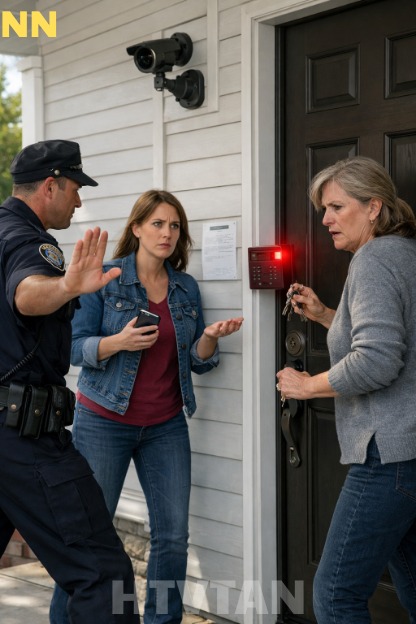
And I definitely didn’t know that one day, a set of stolen house keys would be the least shocking thing Lisa ever tried to use against me.