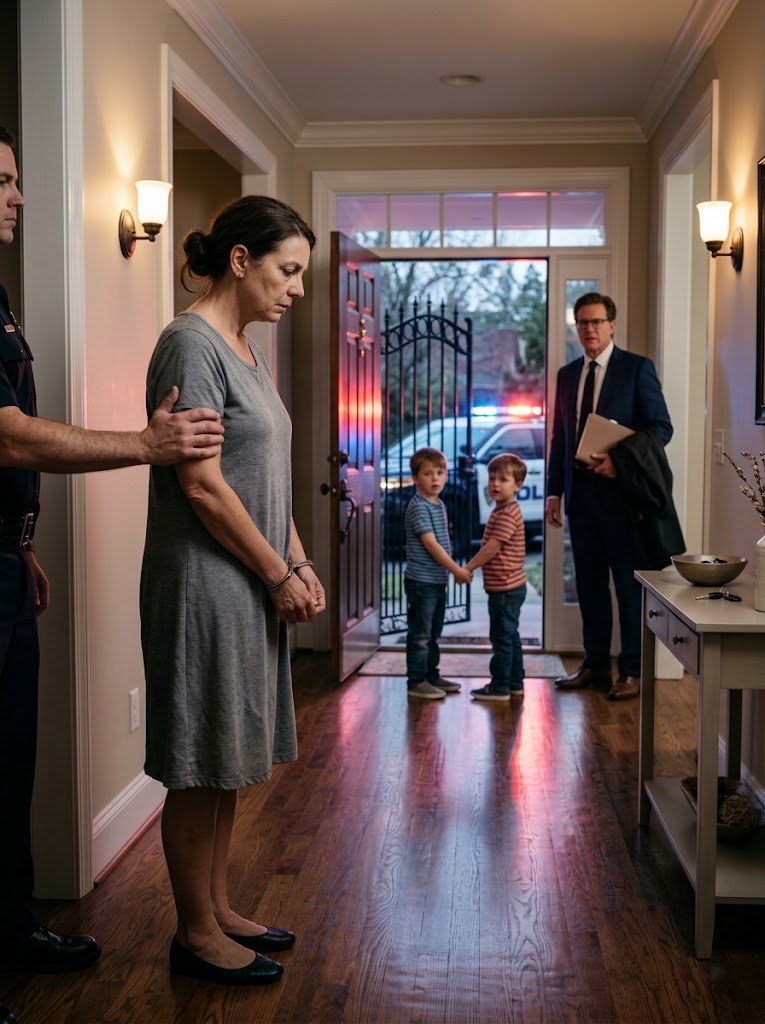
Your sons are still clinging to you on the curb, both of them shaking so hard you can feel the terror rattling through their tiny bodies. One is sobbing into your shirt, the other twisting in your arms to look down the street as if pure rage might bring the nanny back. The flashing lights are gone now, but the night still feels bruised by them, smeared in red and blue like something violent has stained the air itsel
She is still standing in the doorway of your house with her silk robe tied perfectly at the waist, looking less like a frightened victim of theft than a woman who just watched a piece fall into place on a chessboard. Not a hair is out of place. Not a trace of panic touches her face. If anything, there is a faint, cold satisfaction there, so slight another man might have missed it.
You do not miss it.
You carry Mateo and Diego into the house without speaking.
They are four years old, but in moments like this they feel much younger, all panic and instinct and desperate need. Mateo keeps hiccuping from the force of his crying. Diego is red-faced and furious, the way he gets when fear arrives wearing the costume of anger. They are both calling for Carmen, their voices cracking, their little hands curled into the fabric of your shirt as if letting go means betrayal.
Your wife watches you cross the foyer.
“Don’t make this bigger than it is,” she says.
That sentence lands with such precision that it almost takes your breath away. Bigger than it is. Your employee and your sons’ primary caregiver has just been taken away in handcuffs while your children screamed on the front steps, and your wife’s first instinct is not remorse, not explanation, not concern for the boys. It is containment. It is narrative control.
You turn slowly.
“What exactly do you think this is?” you ask.