Part 2
I stayed in my grandparents’ town through graduation. On paper, it looked like a peaceful, stable childhood. In reality, it was a long lesson in how love can be consistent and still complicated.
Grandma Nora and Grandpa Callum never spoke badly about my father, even when I could tell they were disappointed in him. They didn’t defend him either. They simply loved me enough to let me feel what I felt.
I poured everything into school because effort was the one thing I could control. By seventeen, I knew exactly what I wanted: film school. Not acting, not celebrity. I wanted the technical side, the invisible work that made stories real. Camera rigs, lighting, sound. I liked the precision of it. The quiet power of controlling what people saw and didn’t see.
I applied to multiple programs and got into the best one.
The catch was location.
The best film school was in the same city where my father lived with Lisa and her sons.
When Dad found out, he called me with a level of excitement that made my throat tighten. “This is perfect,” he said. “You’ll be close. You’ll be home again.”
Home again. The phrase felt like a lie.
“I’m not moving in with you,” I told him, the words coming out sharper than I intended.
A beat of silence. Then, careful, “Okay. I understand. But I’d like you to come for dinner. Just… let us see you.”
Us. The word included Lisa like she belonged in the sentence.
Against my instincts, I agreed to a visit. Not because I wanted Lisa in my life, but because a small part of me still wanted my dad.
His mansion looked like a magazine cover: tall gates, trimmed hedges, long driveway. When I stepped inside, the air smelled like expensive candles and cold space.
What hit me first wasn’t the size. It was the absence.
There were no childhood photos of me on the walls. No framed drawings. No evidence I’d ever been there. Instead, the hallway was full of pictures of Lisa and her sons: Lisa smiling between them, Jake in a headshot pose, James at some award ceremony I didn’t recognize. Dad appeared in a few, always slightly off-center, like an accessory.
Dad hugged me like he was afraid I’d vanish. He looked thinner than I remembered. Paler. His eyes had a tired hollow that didn’t match the wealth around him.
“You’ve grown up,” he said, voice thick.
Lisa swept in behind him, dressed like she was hosting a fundraiser. “We’re so thrilled you’re here,” she said, and her smile was perfect.
I didn’t believe it.
Dad offered to pay my tuition. I refused. Pride is sometimes survival. “I’m taking a student loan,” I said. “I want this to be mine.”
He looked pained but didn’t argue.
When I turned to leave, suitcase in hand, I heard a door slam and voices in the foyer.
“Mom, you said we could order sushi,” a male voice complained.
Two young men walked in, both tall, both familiar in a way that made my blood turn cold. Same eyes. Same smirk I remembered from a staircase six years ago.
James and Jake.
They froze when they saw me. The recognition passed between us like electricity.
“Hey,” Jake said slowly, too casual. “Wow. It’s you.”
My mouth went dry. Dad looked between us, confused. “You know each other?”
I forced my face into neutrality. I’d learned that skill early. “We went to school together,” I said.
James snorted. “Yeah. That was a while ago.”
Lisa’s hand touched Jake’s shoulder like she was smoothing him. “Be polite,” she said, but her tone carried no real warning, just performance.
Dad brightened, relieved, like he’d found an easy connection. “See? This is good. You all can—”
I cut him off with a smile that hurt my cheeks. “I’m exhausted from traveling,” I said. “I should get to the dorm.”
Dad insisted on a hug again. He held on too long. “Call me,” he said. “Let me help.”
Lisa kissed the air near my cheek. “Welcome to the city,” she said.
Jake and James watched me like I was a complication.
The second I got into my dorm room, I called my grandparents.
When Grandma Nora heard the names, she went quiet in a way that made me feel twelve again. Grandpa Callum’s voice turned low and angry. “Those are Lisa’s boys,” he said. “We suspected, but… that confirms it.”
They told me things I hadn’t known. That Lisa’s first husband was wealthy too. That she’d accused him of domestic violence, but the story never sat right with people who paid attention. That Jake and James had moved into Dad’s life at fifteen and never let him forget he wasn’t their father.
“They treat him like an ATM,” Grandpa Callum said. “And your father… your father keeps trying anyway.”
I stared at my dorm wall, the city noise outside like a constant hum. “Should I tell Dad what they did to me?” I asked.
Grandma Nora hesitated. “If you do,” she said softly, “it will blow up everything. And your father is… not good at handling conflict. Not in his own home.”
I hated that she was right.
So I didn’t tell him. I told myself it was old history, that I could move forward without reopening scars. I told myself keeping quiet was mature.
In hindsight, it was the first time I protected my father when he should’ve been protecting me.
College started, and my life filled with classes, equipment rooms, late-night editing labs. I was good at it. Better than good. For the first time, I felt like I had a future that belonged to me.
Dad tried to be part of it. He texted me small things: How’s class? Want dinner? Proud of you. Sometimes he’d show up outside campus with coffee and a hopeful smile. I’d go, because he looked so relieved when I said yes.
Lisa tolerated my existence the way you tolerate a rainstorm: with annoyance and calculation. Jake and James barely spoke to me unless they had to.
Over time, Dad confided more. Little hints at first. That Lisa spent money aggressively “for the boys’ careers.” That she pushed him to pull strings. That she called him selfish when he hesitated.
“She says I don’t support them,” he told me one night over dinner, eyes glossy with exhaustion. “But I’ve done everything I can.”
“Do they appreciate it?” I asked, already knowing the answer.
Dad’s mouth twitched like he wanted to laugh, but it died halfway. “No,” he admitted. “Not really.”
I didn’t know what to say. Comfort felt too small for what he was describing.
Then, six months into my program, I got a call from my father’s assistant. Her voice shook. “Your dad’s in the hospital,” she said. “He didn’t want to worry you, but… it’s serious.”
I rushed there, heart hammering, expecting an accident.
It was cancer.
Late-stage, aggressive, the kind of diagnosis that makes time feel like it collapses.
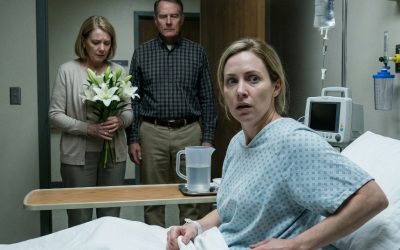
When I walked into his hospital room, Dad looked like a faded version of himself, his skin too pale, his eyes too big in his face. He tried to smile anyway.
“Hey, kiddo,” he whispered.
Lisa wasn’t there.
Jake and James weren’t there.
And in that moment, staring at my father alone in a hospital bed, I understood something that made my stomach twist: my dad had built a mansion full of people who didn’t love him, and he’d still tried anyway.
The city outside kept moving like nothing had changed.
Inside that room, everything had.