Part 1
My name is Lauren Pierce, and the fastest way to learn how strong you are is to have your child’s future rewritten in one doctor’s sentence.
Katie was born on a bright, ordinary Tuesday that should’ve been nothing but balloons and pictures and that soft newborn smell. She was perfect in the way babies are perfect—wrinkly and loud and insistent on being held. Roger and I were exhausted, blissful, and terrified in equal measure.
Then the nurse tried to help her stretch her legs and paused.
Then another nurse came in.
Then the pediatrician’s voice softened, and every parent knows that softening. It’s the moment the world tilts.
Katie has partial paralysis, they told us. She can move her arms. She can grip. She can hug, high-five, throw a toy at your head with surprising accuracy. But below her arms, her body doesn’t respond. The tests came next: imaging, labs, consults with people who used words like “congenital” and “permanent” and “no surgical correction indicated.” Roger and I did what desperate parents do. We hunted for a different answer like it was a missing person.
We went to four doctors in three cities. We spent money we didn’t have, sat in waiting rooms with stale coffee, and prayed over paperwork. Each time we heard, “I’m sorry,” it felt like a door closing.
The darkest part wasn’t the wheelchair. It was the grief. It was watching other parents casually complain about their baby’s sleep schedule while we were silently bargaining with the universe. It was the guilt that slithered in at 2 a.m. even though we knew it didn’t make sense. It was the fear that Katie’s life would be smaller because the world can be cruel, and sometimes it’s cruel in ways that sound like kindness.
When Katie was three months old, my mother, Diane, visited. She walked into our living room, saw Katie’s little legs resting still on the blanket, and her face did something I’ll never forget. Not sadness. Not compassion. Panic, like this was happening to her.
She pulled me into the kitchen and whispered, “You know… you can try again.”
I stared at her. “Try again?”
“For a healthy one,” she said, like she was recommending a different brand of cereal. “One who can walk.”
I don’t remember what I said. I just remember the sound of my own blood rushing in my ears, and the way the floor felt too far away.
David heard her.
My younger brother had been in the hallway, holding a bag of takeout like he’d arrived to help and walked into a scene from a nightmare. David was twenty-four then, still figuring out his own life, but he stepped forward with a heat in his voice I’d never heard.
“Mom, stop,” he snapped. “Katie is not a defective product. She doesn’t need a replacement.”
Diane stuttered, offended. “I didn’t mean—”
“You meant exactly what you said,” David cut in. Then he crouched by Katie’s play mat and wiggled a finger above her tiny hands. “She’s perfect,” he said softly, and Katie grabbed his finger like she agreed.
That was David. He didn’t tiptoe around Katie’s wheelchair like it was contagious. He didn’t treat her like a tragedy. He treated her like Katie.
Every weekend after that, rain or shine, he came over. He’d bring bubbles and silly movies and those little wind-up toys that skitter across the floor. Katie adored him in a way that made my chest ache. When he walked through the door, she lit up like someone turned a switch on inside her.
I’ve seen adults get awkward around disabled kids, even well-meaning ones. They’ll overcompensate, speak too loudly, or avoid eye contact because they’re afraid of doing the wrong thing. David never did that. With him, Katie didn’t feel like an explanation. She felt like a kid.
As Katie grew, so did our approach. We stopped measuring her life by what she couldn’t do and started building what she could. Physical therapy, occupational therapy, adaptive equipment. We found a community—other families who understood the alphabet soup of medical terms and the silent exhaustion of fighting for accessibility. We learned that joy and grief can live in the same room without canceling each other out.
Katie learned to paint holding the brush between her fingers like a tiny warrior. She learned to throw glitter like it was a weapon. She learned to win arguments with a look that made Roger and me laugh because it was the exact look David used when he was about to be stubborn.
By the time Katie was six, her wheelchair wasn’t a symbol of limitation to her. It was her speed machine. She decorated it with stickers and ribbons and called it “my rocket.” She’d zoom across the living room and shout, “Beep beep!” like she was the mayor of fun.
That’s the Katie my brother loved. Not the wheelchair. Not the diagnosis. Katie.
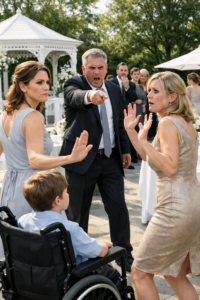
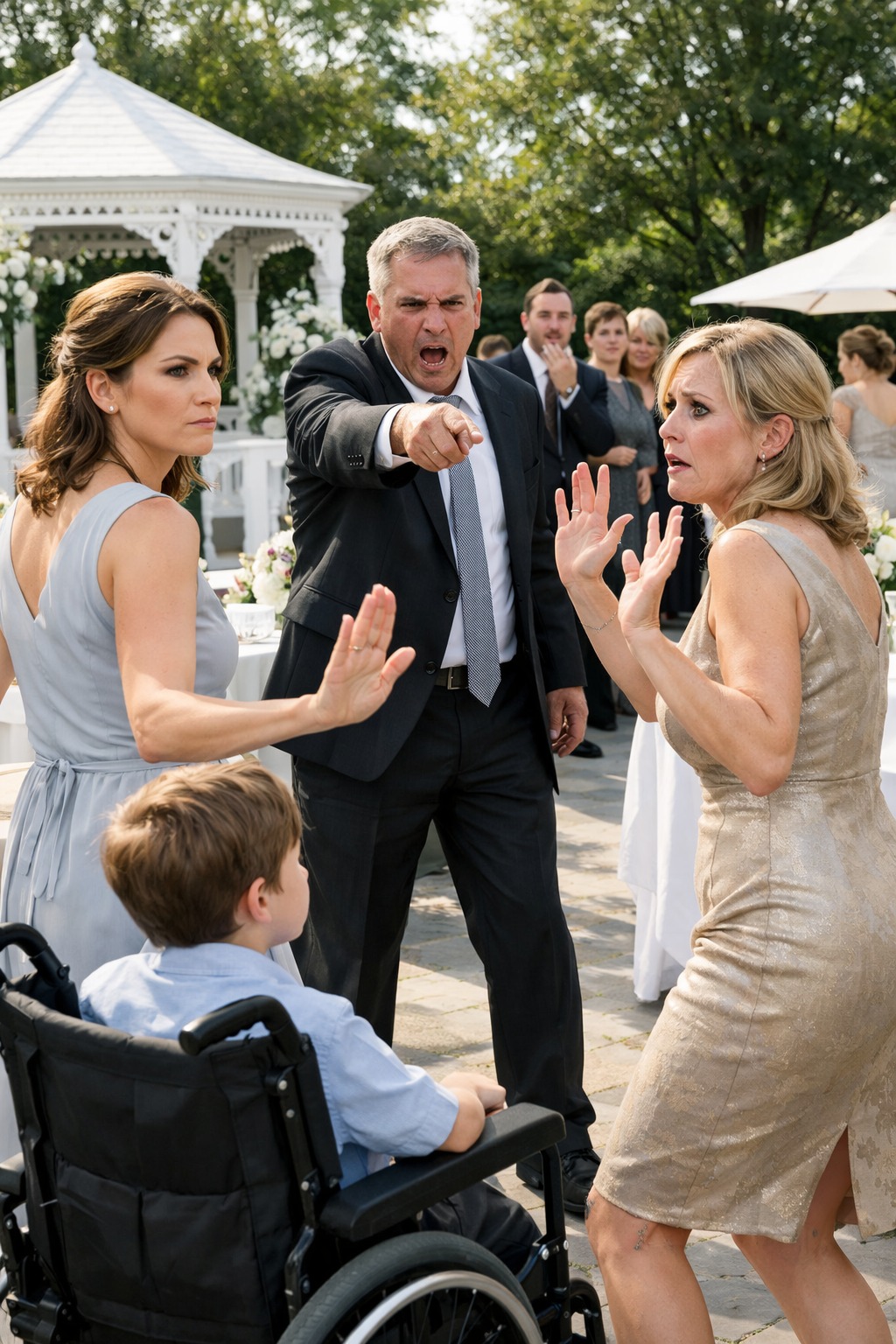
So when David called me two weeks before his wedding and said, “Lauren, I need Katie there,” my throat tightened instantly.
Because the invitation had clearly stated: child-free wedding.
And because I already knew what it meant for David to go against the plan.
It meant he wanted Katie included badly enough to risk a fight with his fiancée.
It meant Katie wasn’t an exception to him.
She was family.