Part 2
The first year of marriage really was happy, at least in the way a young couple thinks happiness is supposed to look.
We rented a small house in the suburbs with beige carpet and a backyard that smelled like fresh-cut grass. It wasn’t glamorous, but it was ours. I put up cheap curtains and hung framed photos from our honeymoon. Alex built a little raised garden bed because he said he wanted to “be the kind of dad who grows tomatoes.”
I started working as an assistant at an elementary school while I finished my teaching certification. My days were sticky hands and glitter explosions and kids who asked questions like, “Do worms have feelings?” Alex worked at a logistics company and got promoted fast. He came home tired but proud, loosening his tie at the door like he was shedding the day.
We cooked dinner together. We watched shows curled up on the couch. We took little weekend trips to Asheville or Wilmington when we could afford it. We talked about children the way people do when they’re building a shared future—like it’s something you order off a menu once you’re ready.
“I want a son,” Alex admitted one night, sitting on the back porch with a beer. “I want to teach him baseball. Take him to games. Be… better than my dad was sometimes.”
Robert wasn’t cruel, but he was strict. Alex carried that weight without always naming it.
“I want a daughter,” I said, smiling into my iced tea. “I want to braid her hair and buy her those tiny shoes that don’t make sense because babies can’t walk.”
Alex laughed. “We’ll have both.”
He said it like he could plan it.
When we decided to start trying, it felt like stepping into the next room of our life. We were giddy the first month, then quietly hopeful the second. By month six, I was pretending not to count days. By month twelve, I’d started to think maybe it would take longer, maybe my body was broken in some invisible way.
Then, fourteen months after that porch conversation, I woke up nauseous.
At first I blamed takeout. Then stress. Then the flu that had been going around the school. But the nausea didn’t leave. It stuck to me like a shadow. After four days, I drove to the pharmacy, bought a test, and told myself I was just ruling things out.
The first test showed two lines.
I stared at it until my eyes went blurry. Then I bought three more, because one line can be a mistake, but four lines feel like a verdict.
When Alex came home, I didn’t say anything. I handed him the test like it was fragile.
He looked at it for a long moment, brows pulling together, as if the concept needed translating.
“Is this… is this really—?” His voice cracked.
I nodded.
His face changed in a way I will never forget. His whole body softened. He wrapped his arms around me so tight I could barely breathe, then spun me around the living room like we were teenagers.
“Oh my God,” he said, laughing and crying at the same time. “I’m sorry. I’m sorry—I mean, I’m not sorry. This is the best day of my life.”
For a while, I let myself live in that moment. The joy. The certainty.
Pregnancy was harder than I expected. Morning sickness wasn’t just mornings; it was all day. I lost weight in the first trimester and the doctor frowned at my charts. I worried constantly, the way new mothers do, as if worry itself could keep the baby safe.
Alex came to appointments at first. He sat beside me, knee bouncing, and squeezed my hand during ultrasounds. He talked to my belly like it was a tiny coworker he was trying to impress.
“Hey, kid,” he’d say. “You better be nice to your mom. She’s doing all the work.”
Sometimes he would press his ear to my stomach and look up at me like he’d discovered a miracle.
I thought, This is it. This is the life I wanted.
Labor started two weeks early.
It was the kind of pain that doesn’t knock politely. It kicked the door down. I woke up to a sharp cramp low in my abdomen and sat up so fast I felt dizzy.
“Alex,” I whispered, then louder, “Alex!”
He jolted awake like he’d been waiting for it. For a moment he was all motion—grabbing the hospital bag, fumbling for keys, checking his phone like a man trying to outsmart time.
The contractions came in waves that stole my breath. In the car, I gripped the handle over the door so hard my fingers went numb. Alex drove like his foot was connected to my pain, like speeding could make it hurt less.
At the hospital, everything turned into bright lights and masked faces and nurses who spoke in calm voices like they were narrating a storm.
I screamed. I begged. I swore I’d never do it again.
Then, after an eternity measured in minutes and panic, I heard it—the sound of a new life arriving, loud and indignant.
“A boy,” the midwife said, lifting a tiny red bundle. “A healthy boy.”
Alex stood beside me with tears streaming down his face. When they placed our son in his arms, he held him so carefully, like the baby was made of glass.
“I’m your dad,” he whispered. “I’m right here. I’ve got you.”
I believed him.
The first weeks after birth were a blur. Feeding every two or three hours. Diapers. Rocking. The strange, aching tenderness of loving something so much it hurts. My body felt wrecked—stitches, soreness, breasts aching from milk, exhaustion like a weight on my chest.
At first, Alex helped. He got up a couple times a night, walking the baby through the living room while I tried to sleep. He made me toast when I forgot to eat. He told people at work about his son with the kind of pride that made his voice lift.
But even in those early weeks, something shifted.
He started coming home later. He started talking about deadlines and big projects. He’d sit on the couch and stare into his phone like it held oxygen.
If the baby cried at night, Alex sometimes groaned and pulled a pillow over his head.
“I’m exhausted,” he’d mutter, voice thick with irritation. “I can’t do this.”
I told myself it was normal. New parents are tired. Marriages strain under the weight of a screaming newborn. This was temporary.
But the days became a loop. Feed. Change. Rock. Feed again. And our conversations shrank until they were nothing but logistics.
When did he eat?
Do we have wipes?
Pediatrician Thursday.
We stopped being lovers. We became coworkers.
I looked in the mirror and didn’t recognize myself. Stretch marks. Dark circles. Hair that looked like it had given up. I felt ugly, broken, like my body belonged to someone else now.
When Alex tried to touch me, I flinched. Not because I didn’t love him, but because I felt empty. I felt like my skin had no room left for anyone else’s needs.
At first he said he understood. He told me he’d wait.
Then the waiting turned into irritation.
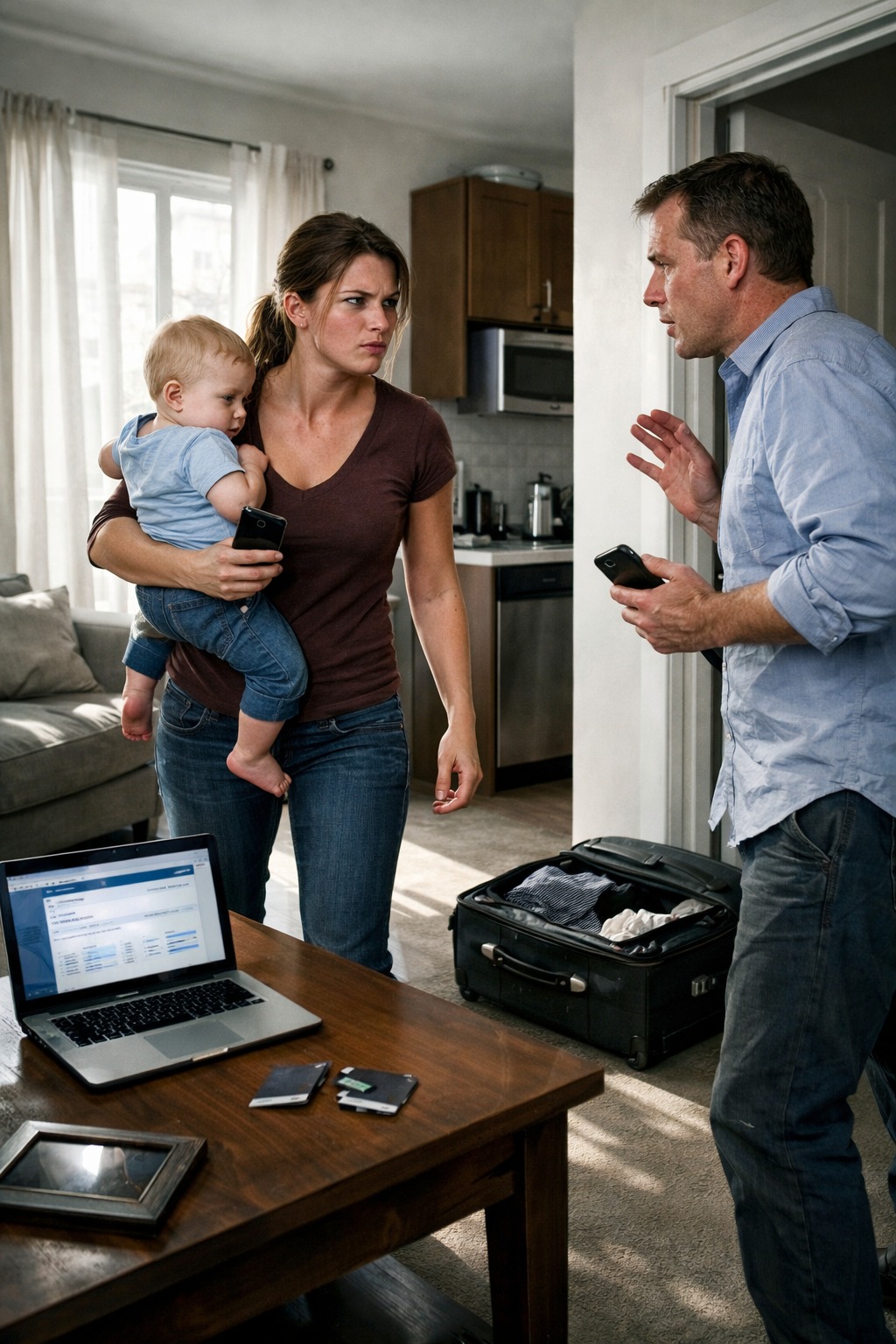
If the baby cried for too long, Alex would sigh like the noise was personal. “How long is this going to go on?” he’d snap. “What does he want?”
As if I had a secret switch and I was just refusing to flip it.
Sometimes he’d get up and go into the guest room, shutting the door behind him, leaving me alone in the dark with a wailing newborn and a heart that felt like it was cracking.
I started crying in the bathroom with the shower running so no one would hear. I’d sit on the tile floor, knees to my chest, and sob silently while the water roared.
I thought postpartum depression was a monster inside me.
I didn’t realize part of what I was feeling was instinct.
A warning that something in my life was coming undone.