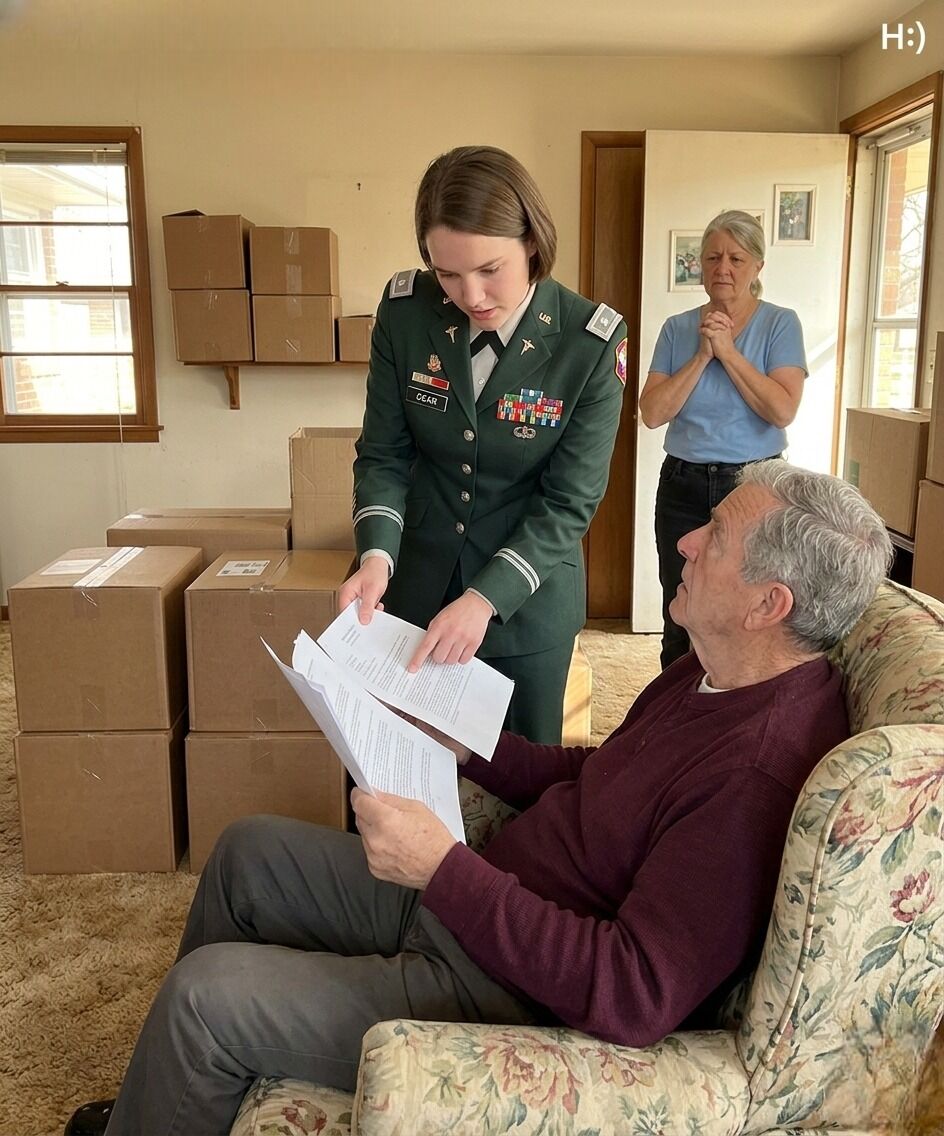
Shock gave way to disbelief, and disbelief to a simmering anger I barely recognized as my own. “That can’t be right,” I whispered, my voice cracking under its own weight. Richard slid a document toward me, his eyes cold and calculating. “Sign. You’re not family anymore,” he said, and Marlene added with a soft, sharp precision, “You were married briefly. Ethan understood responsibility.” Responsibility, they implied, as though my presence had been a liability, a temporary disturbance to the natural order of inheritance. They spoke of the Maple Ridge house, Ethan’s truck, his meticulously cared-for tools, and the military death benefits meant to sustain me in the absence of my husband, cataloging them as though I were an intruder in a carefully arranged exhibit. My hands trembled—not from grief, but from the deep, gnawing certainty that something had been manipulated, twisted. “May I see the will?” I asked, and Pierce tilted the document just enough for me to inspect it. Ethan’s signature was there, unmistakable to anyone who had known him, yet stiff, rigid, almost robotic, lacking the fluidity of his natural hand. Richard’s warning slashed through the room, sharp as a blade: “Don’t make this harder than it has to be, Claire.” I met his gaze evenly, unflinching, and reached into my purse to pull out a worn, carefully folded envelope, Ethan’s handwriting sprawled across the front. “If my name wasn’t read,” I said quietly, “he told me to give this to his lawyer.”

THE BILLIONAIRE STOOD FROZEN ON THE FRONT STEPS AS HIS TWINS SCREAMED AND THE NANNY THEY ADORED WAS TAKEN AWAY IN HANDCUFFS, WHILE HIS GLAMOROUS WIFE WATCHED FROM THE DOORWAY WITH A STRANGE, CHILLING CALM—BUT MINUTES LATER, WHEN ONE SHAKING LITTLE BOY POINTED AT HIS MOTHER AND SAID, “SHE LIED,” HE RAN TO THE SECURITY ROOM, PULLED UP THE FOOTAGE, AND DISCOVERED A SECRET SO TWISTED IT HAD BEEN GROWING INSIDE HIS OWN HOUSE FOR MONTHS… RIGHT BEFORE HE OPENED THE GUEST-ROOM CLOSET AND FOUND THE ONE THING THAT DRAINED THE COLOR FROM HIS WIFE’S FACE

My Family Tried to Hide Me at My Sister’s Wedding, but Everything Changed When a High-Profile Guest Arrived Looking for Me

My Daughter Married My High School Sweetheart—But at Their Wedding, He Pulled Me Aside and Revealed a Secret That Shattered Everything

My Sister Moved Her Housewarming Party to the Same Day as My Daughter's Funeral – Everything Changed When Her Husband Spoke Up

She Woke Up With a Six-Inch Scar and Learned Her Parents Had Drugged Her, Forged Consent, and Stolen Her Kidney for the Brother They Always Loved More—But What They Thought Was a Perfect Family Secret Became a Federal Case That Destroyed Their Entire World…