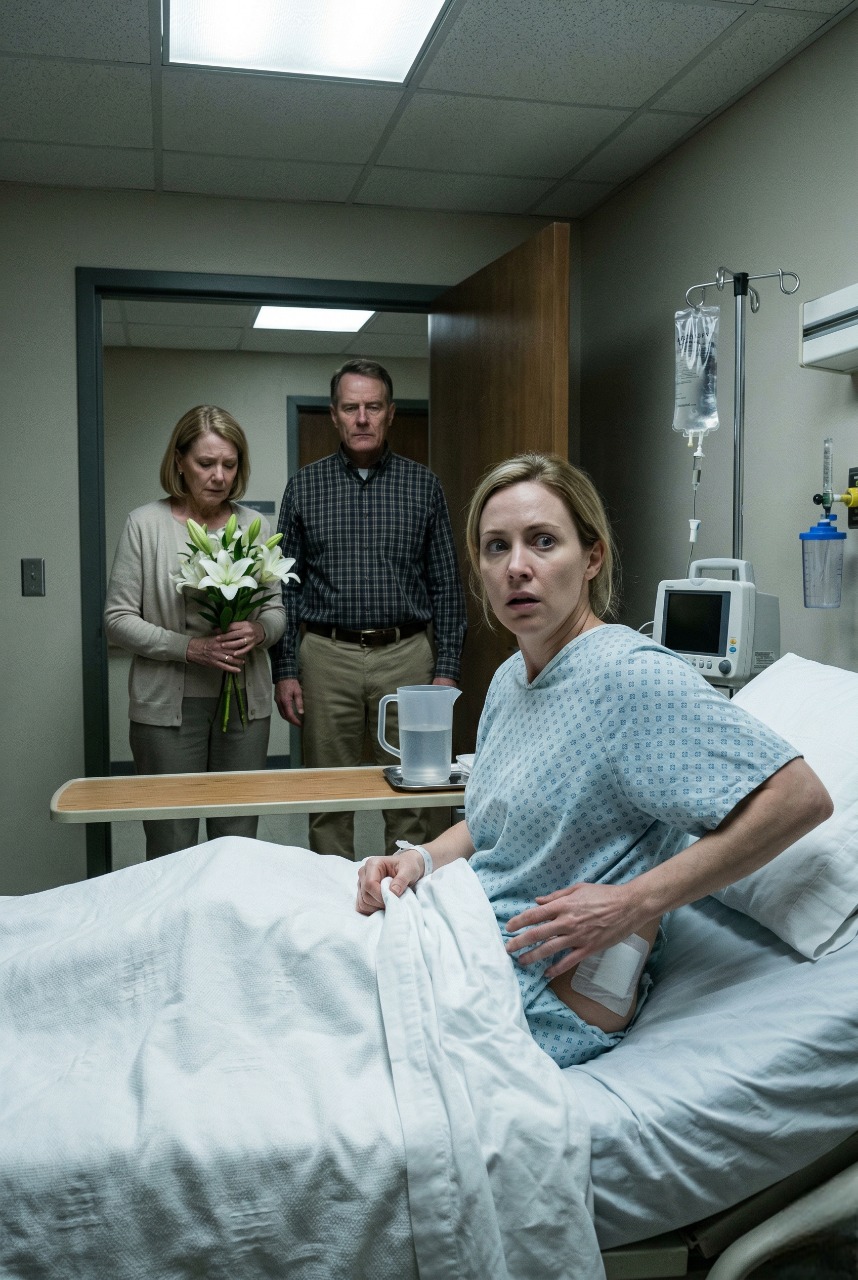
I was not his daughter in that room.
I was inventory.
My mother reached for my hand, and I pulled mine away so fast the IV line jerked.
“Thea,” she said, voice cracking now, “please don’t make this ugly. It was the only way.”
“The only way,” I repeated.
My father’s jaw tightened. “You left us no choice.”
That is the sentence I remember most.
Not We’re sorry.
Not We panicked.
Not We were afraid he would die.
You left us no choice.
Like my refusal had been the crime. Like my body had become family property the second I said no.
Something inside me went still then. Not numb. Not calm. Just still in the way a room goes still right before glass breaks.
When they finally left, I picked up my phone and called 911.
I spoke clearly. I gave the hospital name, the surgeon’s name, my own name, my age, my profession, and the exact nature of the crime.
“I was brought here under false pretenses,” I said. “I was sedated without consent. While unconscious, my kidney was removed and transplanted into another patient. My parents forged legal authority to authorize surgery they had no right to approve. I am a competent adult. This was not medicine. This was assault.”
The dispatcher asked me to repeat it.
I did.
Two hours later, a detective from the FBI walked into my room.
Her name was Vivian Carter. Mid-forties, cropped gray hair, dark suit, no wasted motions. She sat where Dr. Mercer had sat earlier and opened a notebook.
She didn’t start with sympathy. She started with a question.
“Do you know where your kidney went?”
“Yes,” I said. “My brother. Two floors below me.”
She wrote that down.
Then she looked at me with an expression that was not soft, but was steady.
“Tell me everything.”
So I did.
I told her about Marcus’s diagnosis.
I told her about my family.